Yamuna Shanmugam Residence
Residence at Erode
Project info
Category
Architecture and Interiors
Timeline
Ongoing
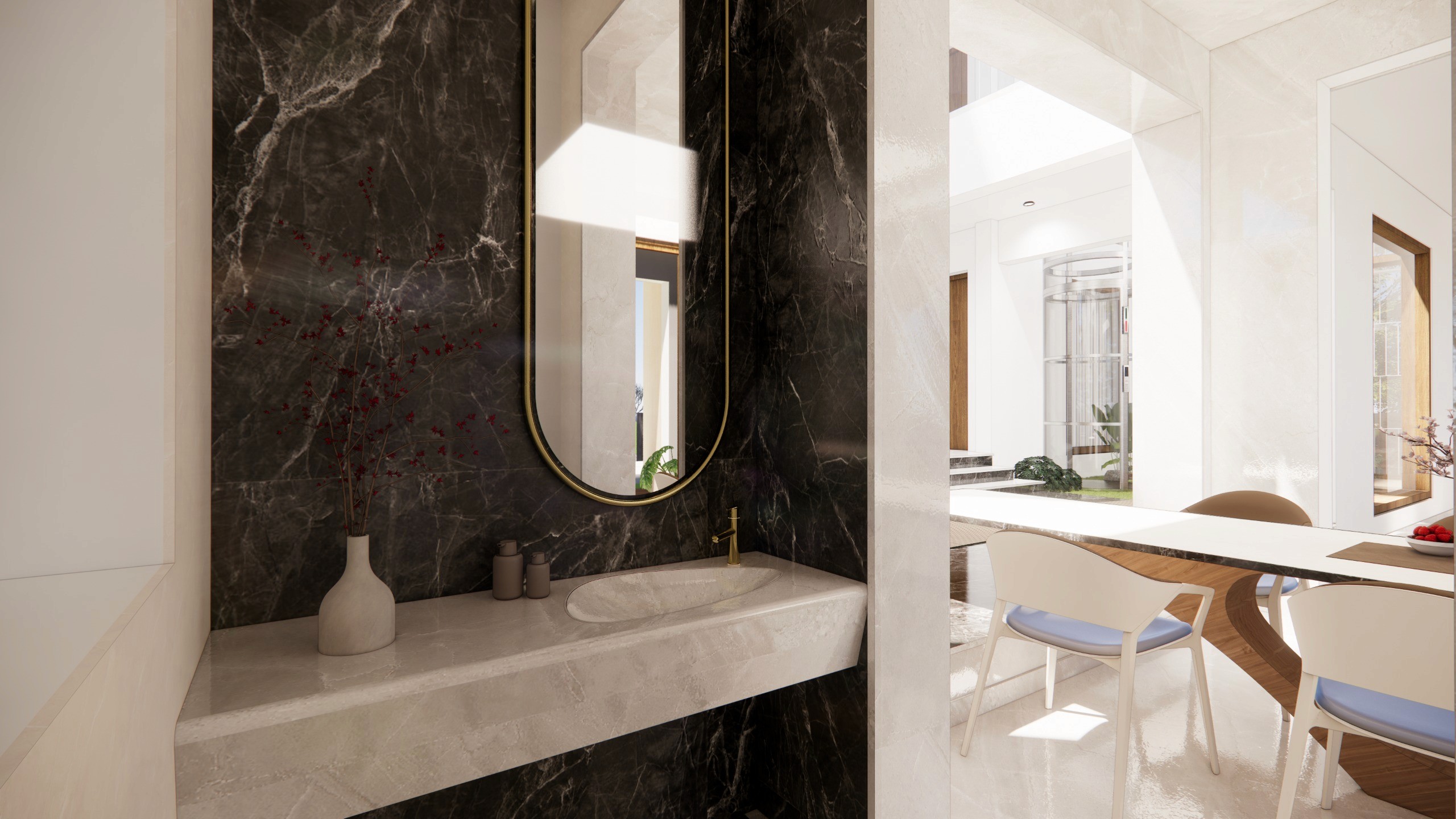
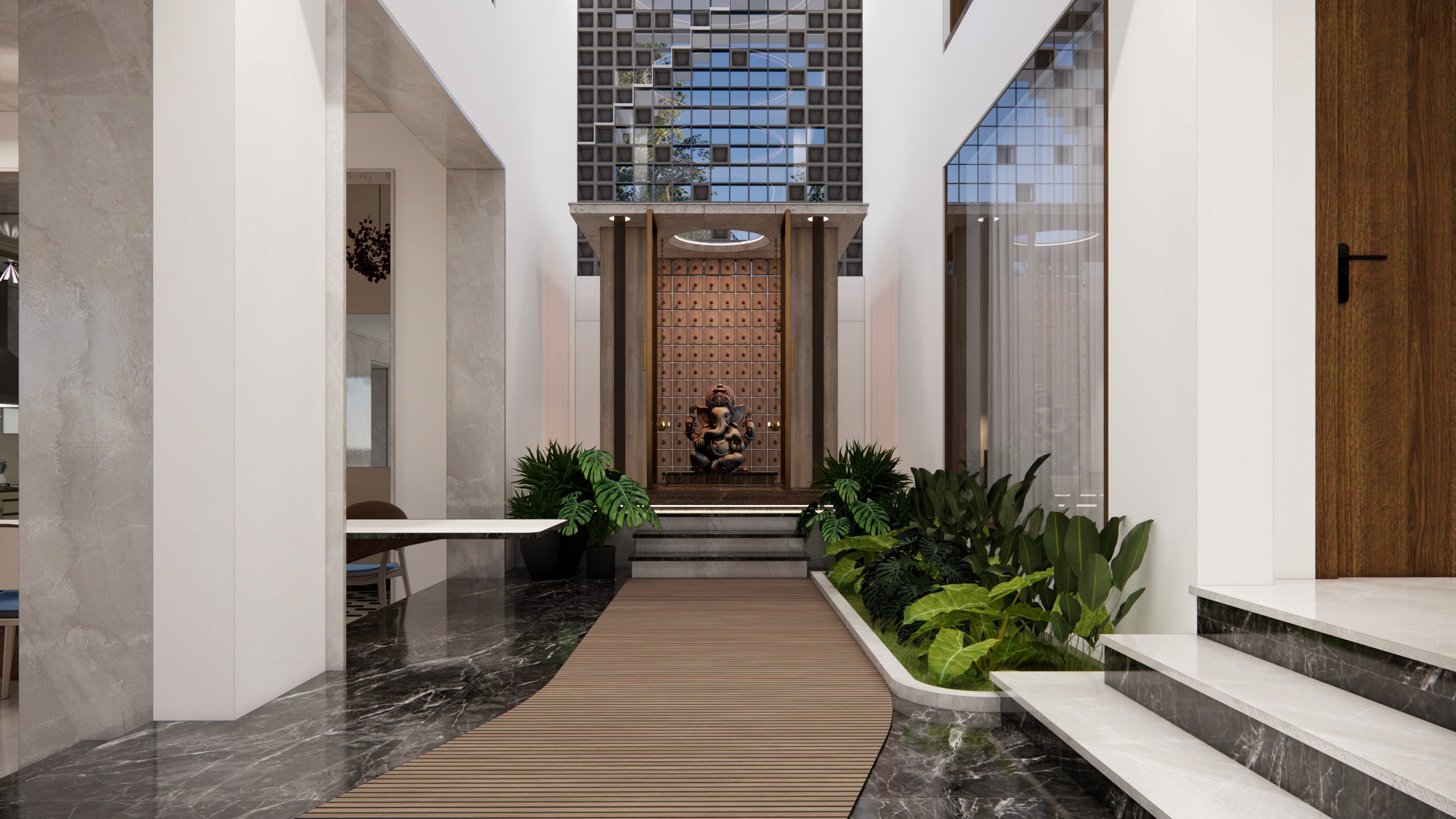
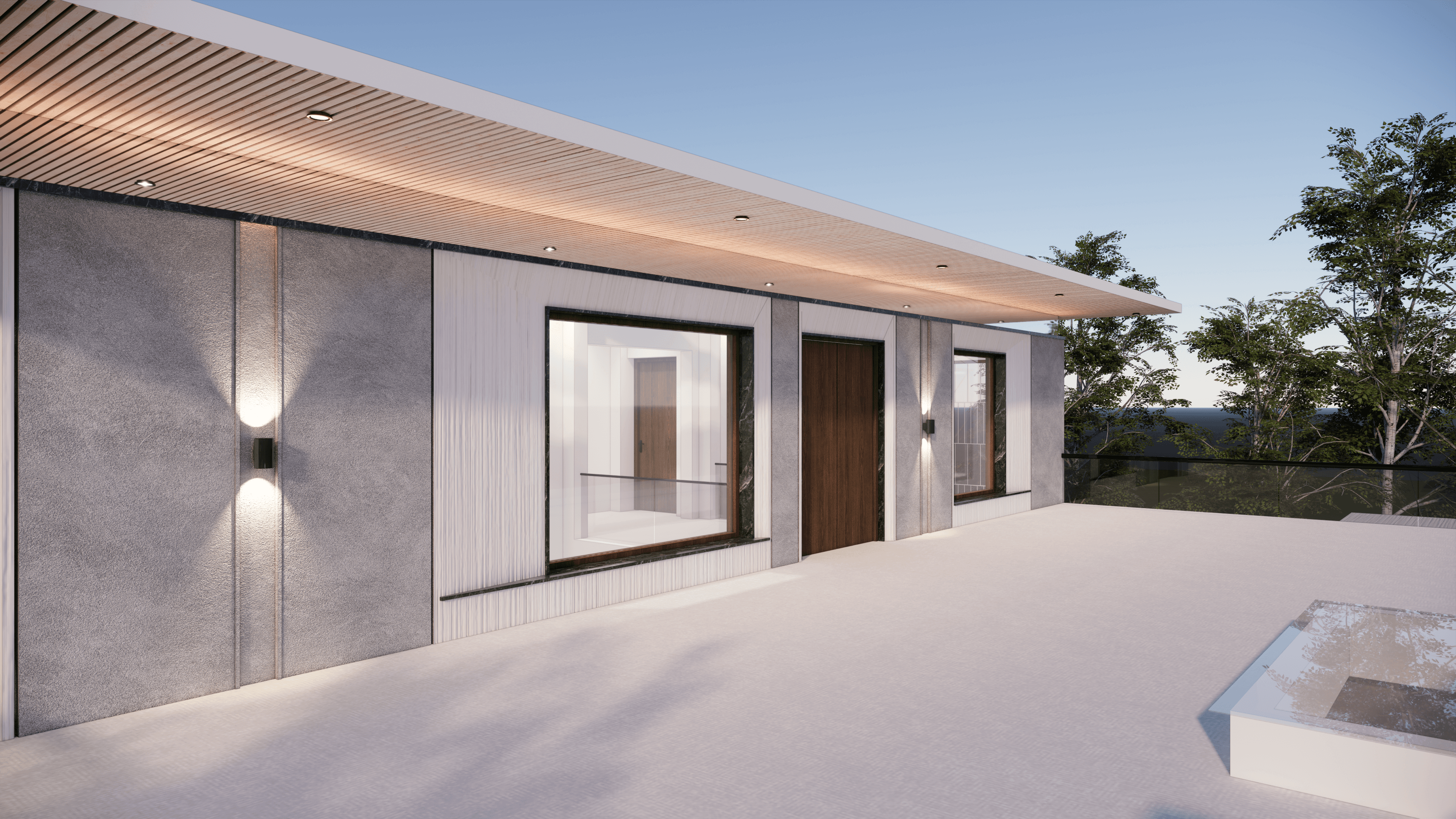
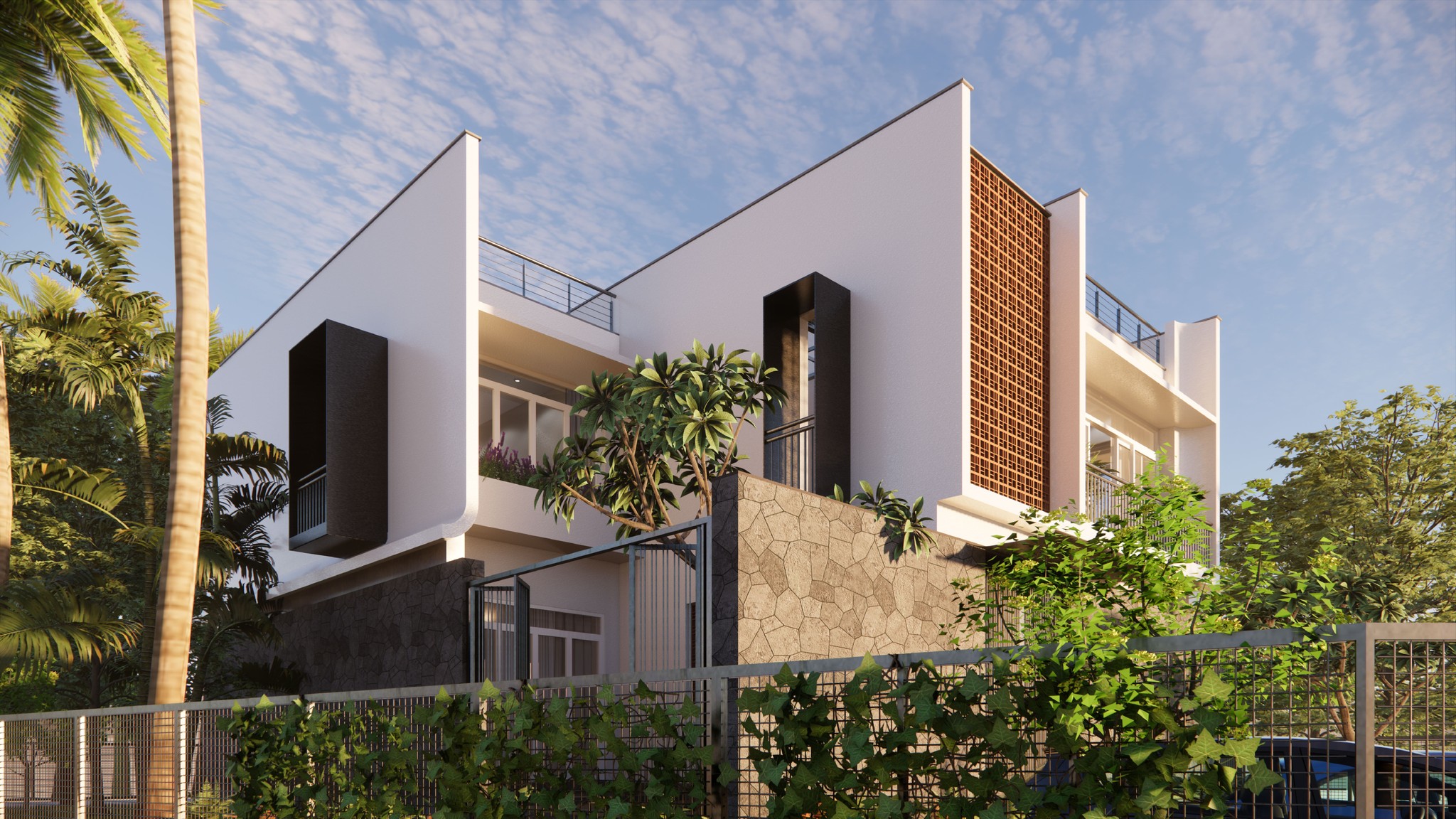
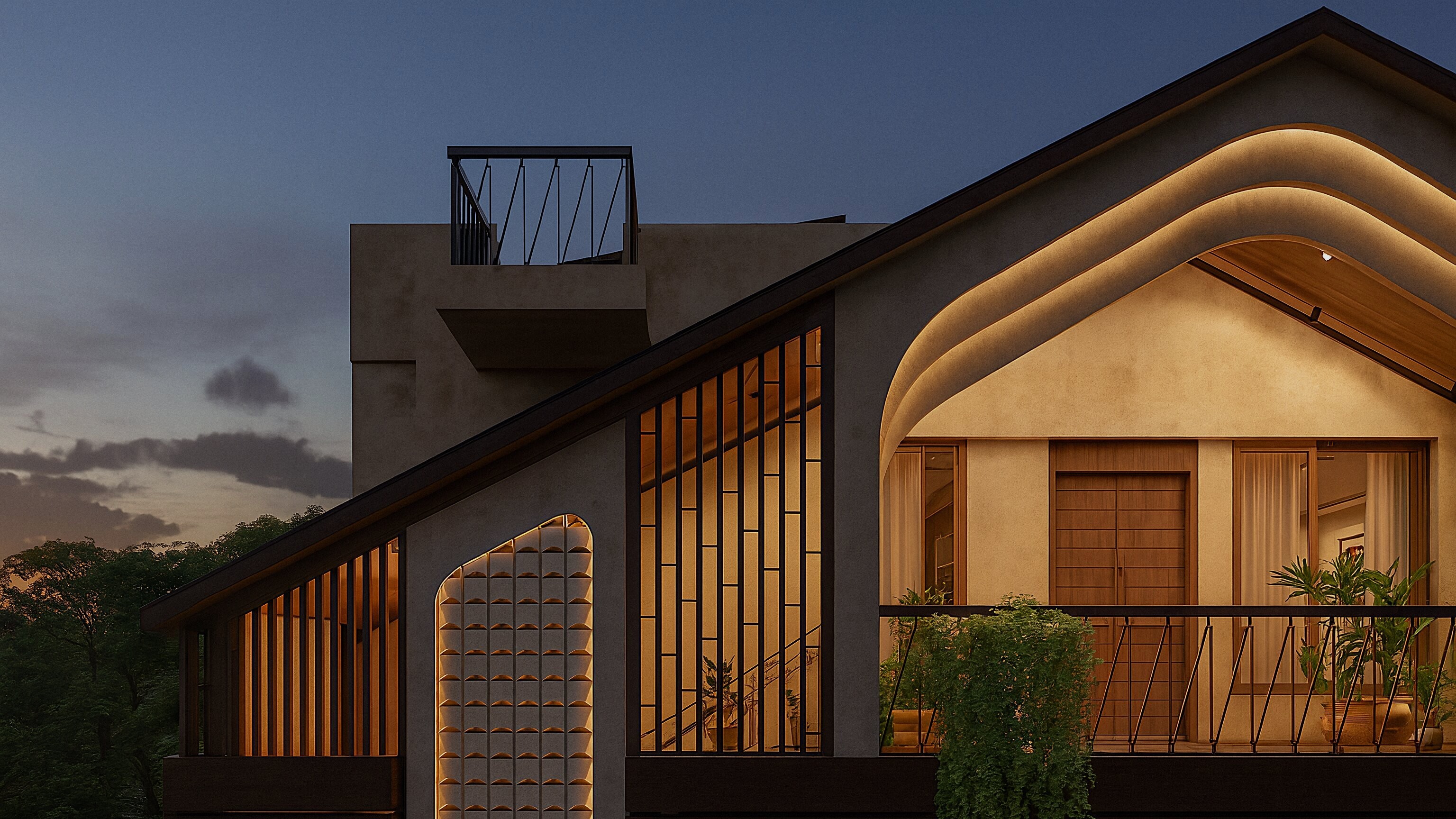
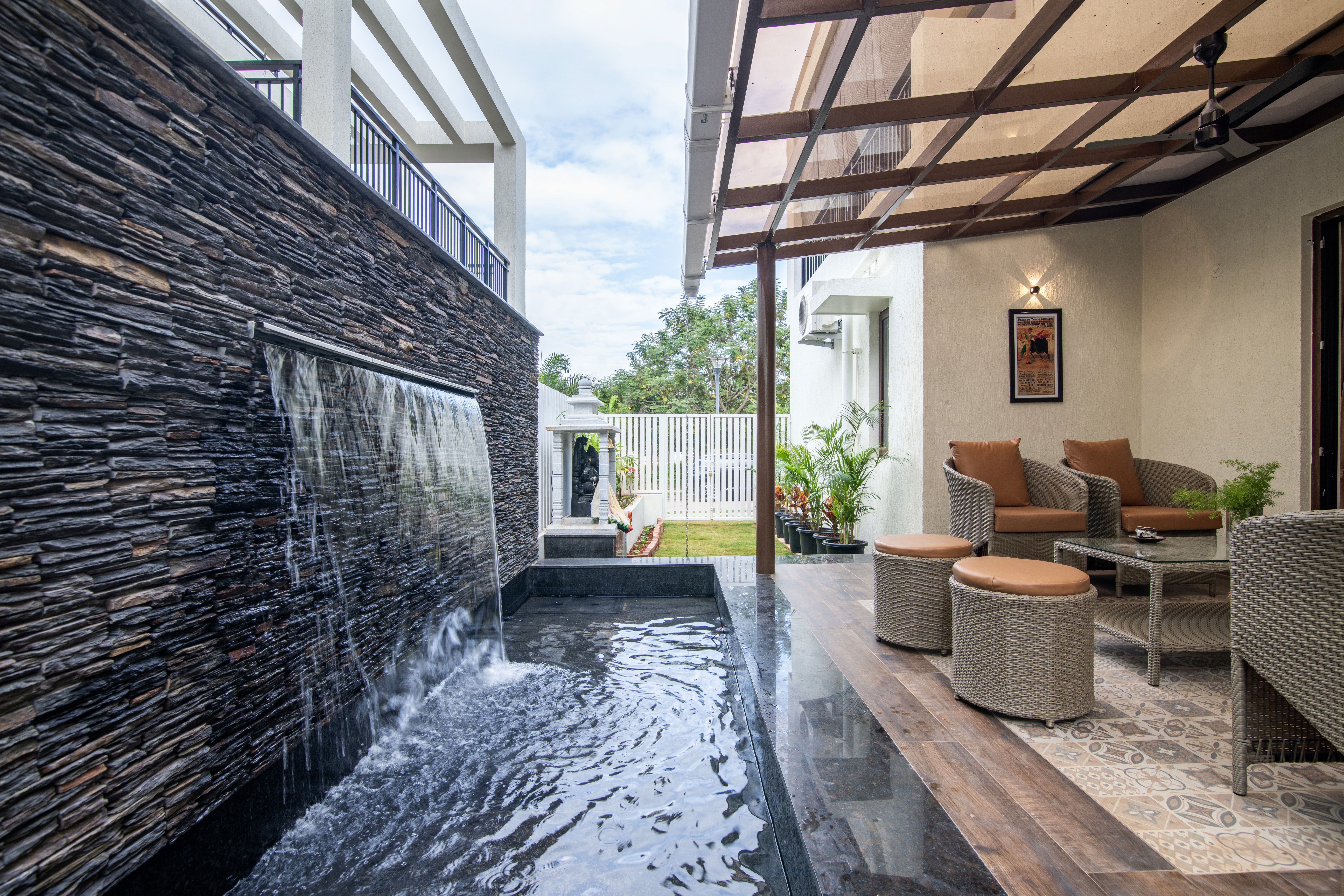
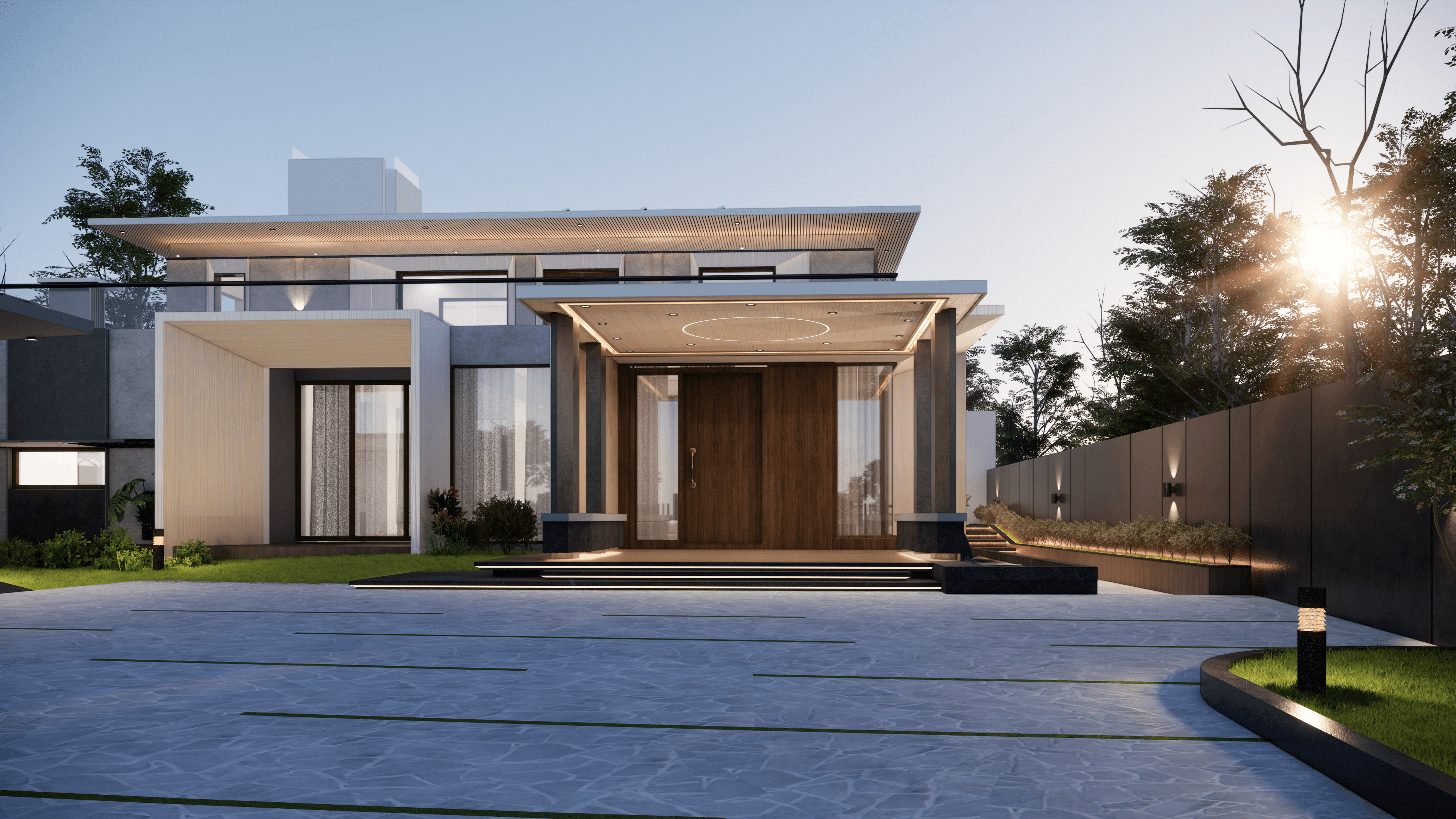
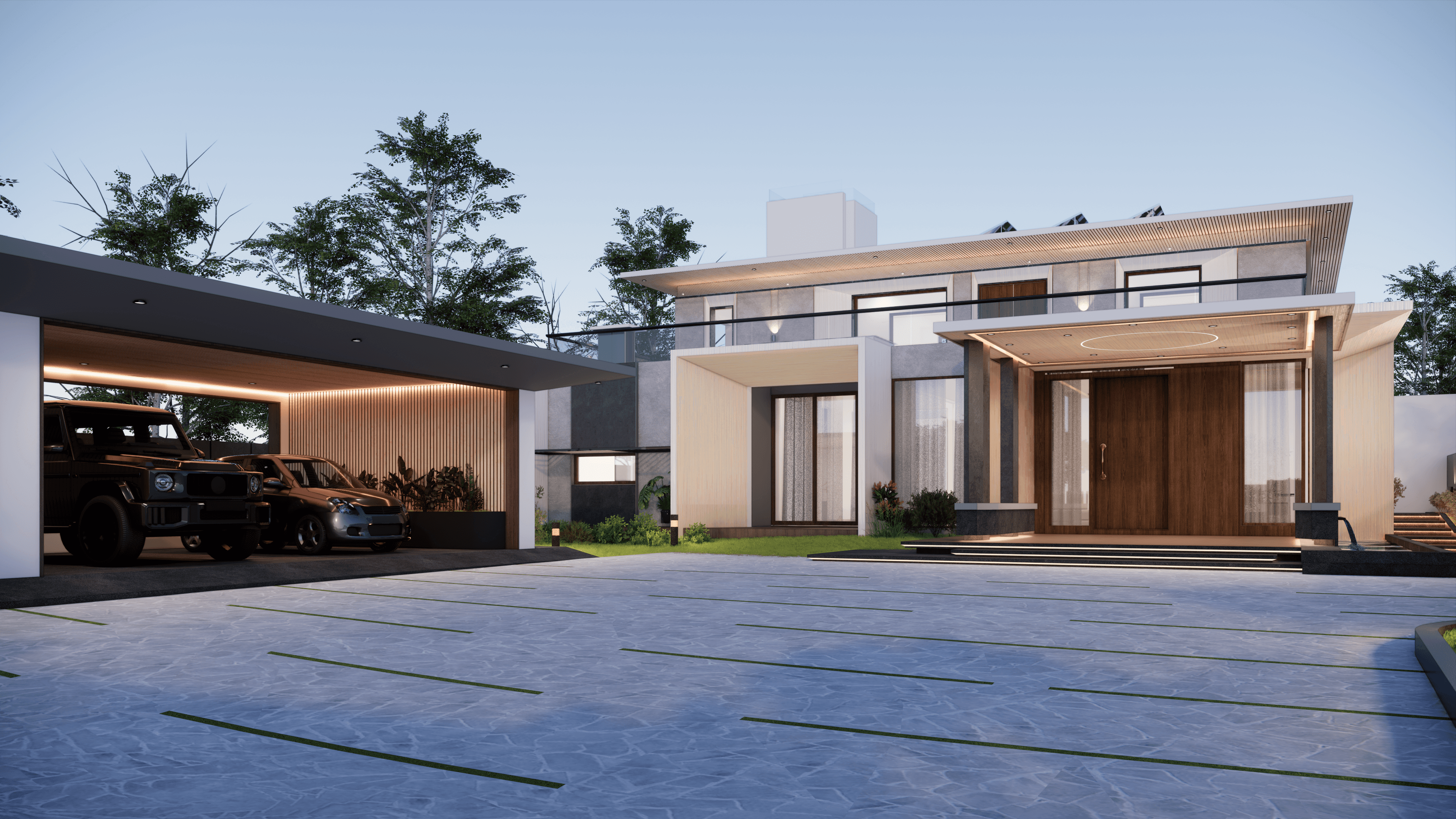
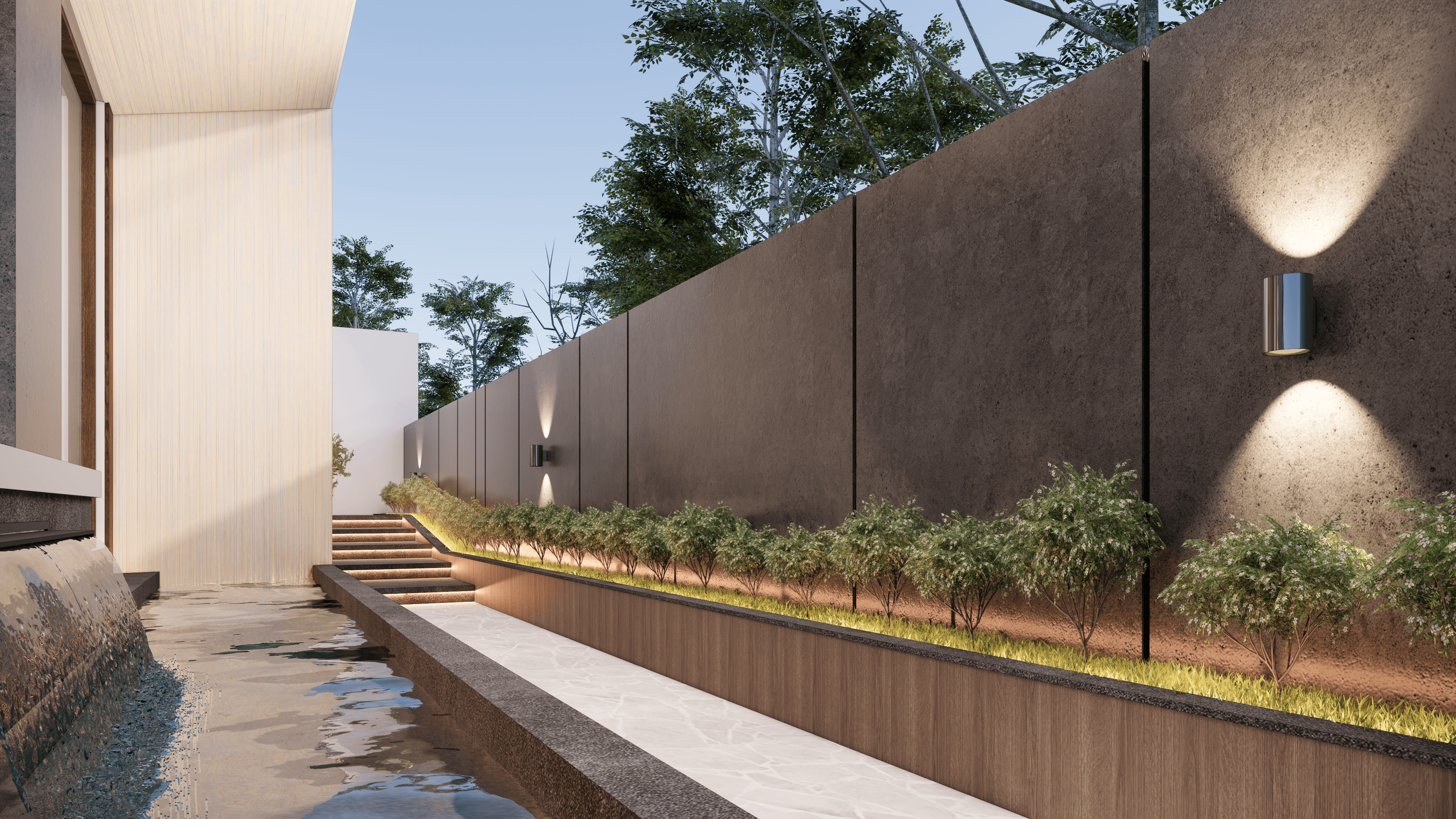
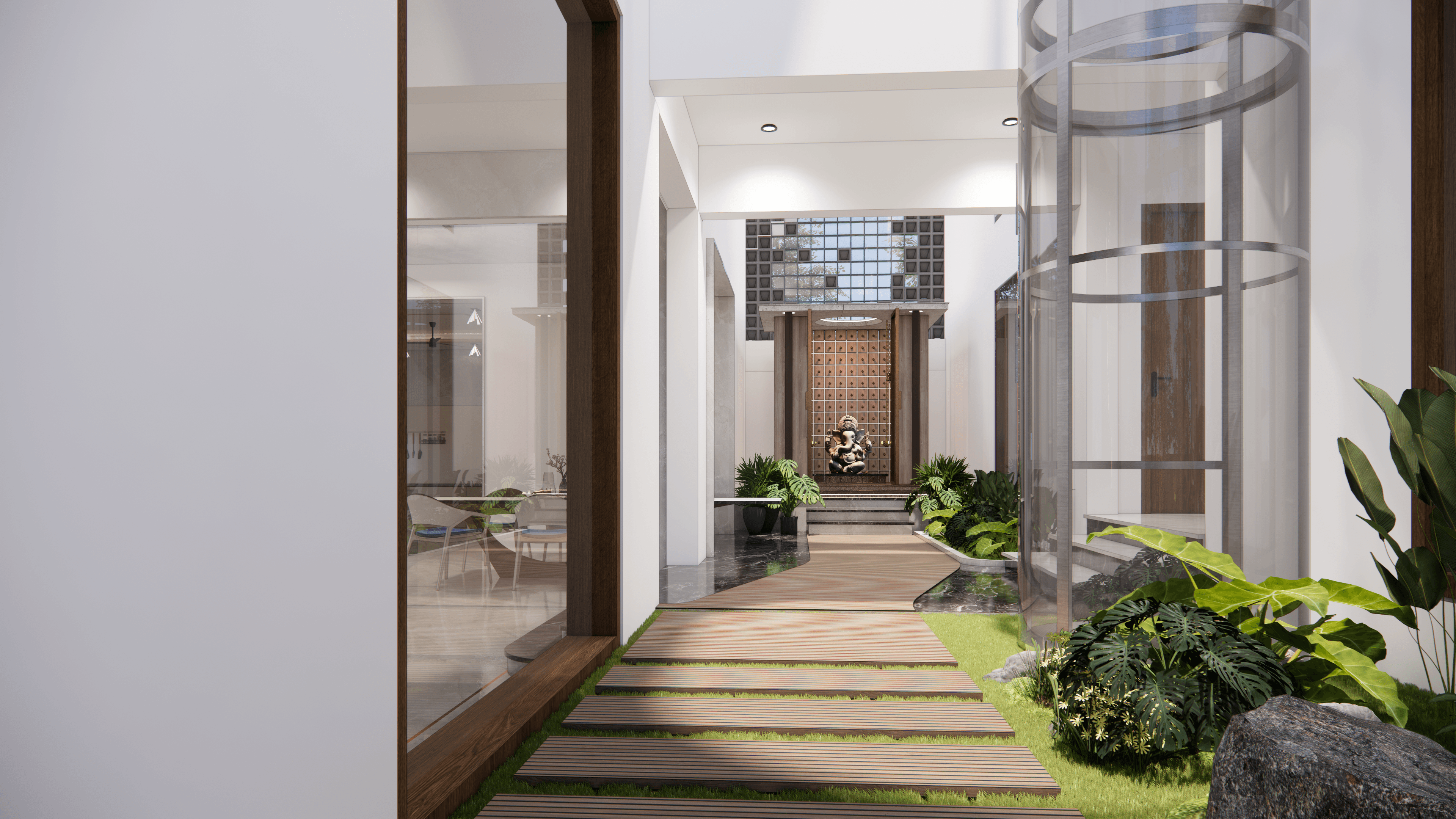
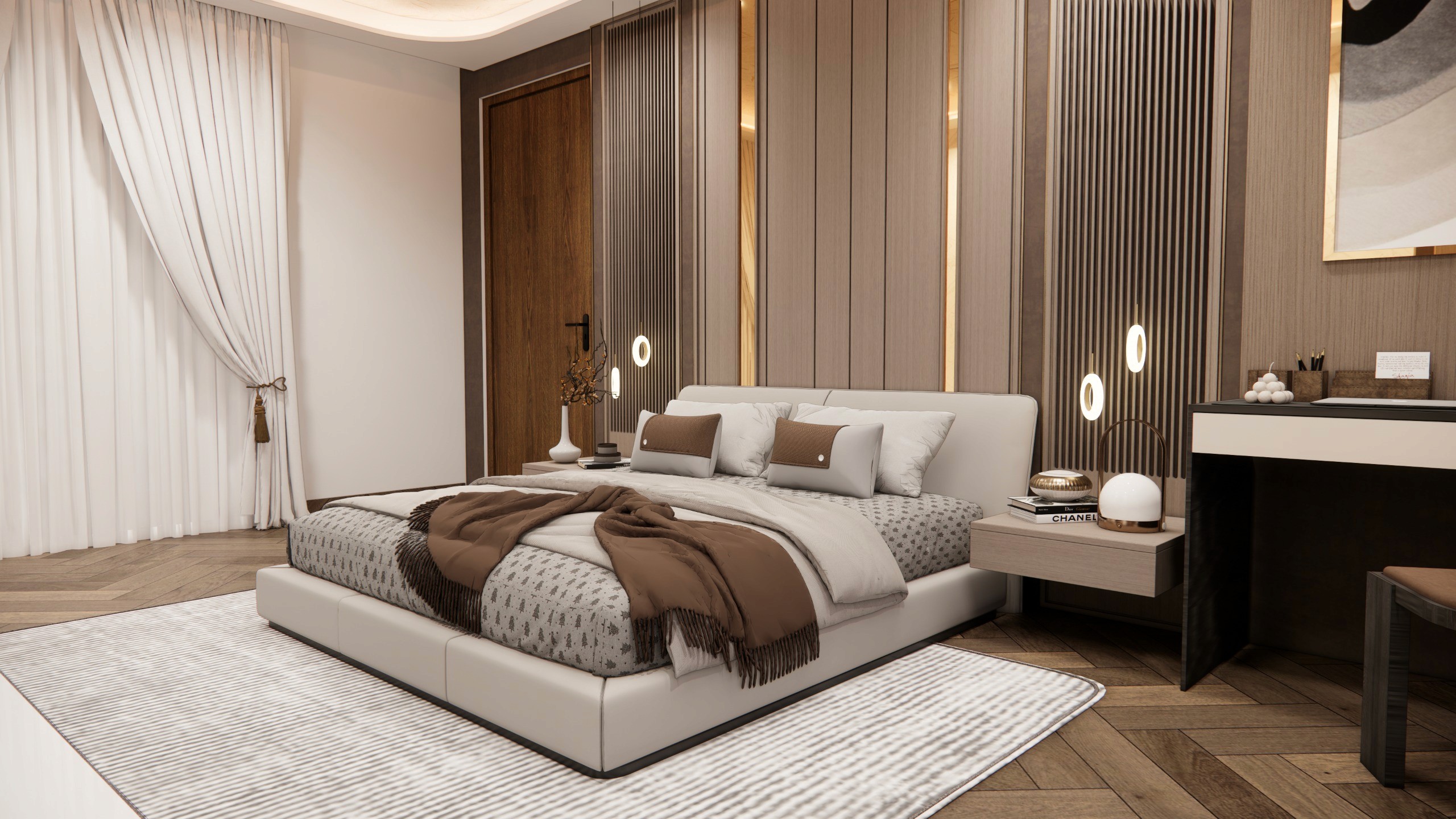
Located in a rapidly transforming context in Erode, the Yamuna Shanmugham Residence is conceived as a home that balances openness with security, and spatial fluidity with clarity of zones. The defining feature of the house is a generous double-height internalized volume that traverses the building along a north–south axis. Large openings oriented towards the north and east frame views of the surrounding landscape and the front garden, bringing in abundant daylight while maintaining a comfortable indoor environment. The double-height central volume is anchored at both ends with secure metal frameworks, ensuring safety without compromising transparency. The spine organizes the home into distinct zones: Zone 1: The primary living zone comprising the living, dining, and kitchen Zone 2: The double height internal space, which acts as a transitional and experiential core Zone 3: The private bedroom and staircase zone. A gentle level shift of three steps marks the transition between these zones, introducing subtle hierarchy while maintaining visual continuity. This allows high ceilings in living spaces, enriching the sense of volume and openness. The bedrooms open into the double-height space through expansive, grill-free glass panels, allowing visual connection across the house. Skylights further enhance the vertical space, with a mechanized sun-shading systems that regulate light and heat, ensuring comfort.
The process
The design process was driven by an exploration of how a central volume could organize the home while balancing openness with security. Early studies focused on establishing a strong spatial spine along the north–south axis, around which distinct zones could be clearly defined yet remain visually connected. Iterations of section and level variations helped introduce hierarchy without interrupting continuity, leading to the integration of subtle level shifts and a double-height core. Openings, structural elements, and protective features were carefully calibrated to allow light, ventilation, and transparency while ensuring safety. Material, glazing, and shading strategies were developed in parallel to enhance comfort, resulting in a cohesive spatial system that integrates climate responsiveness with everyday living.